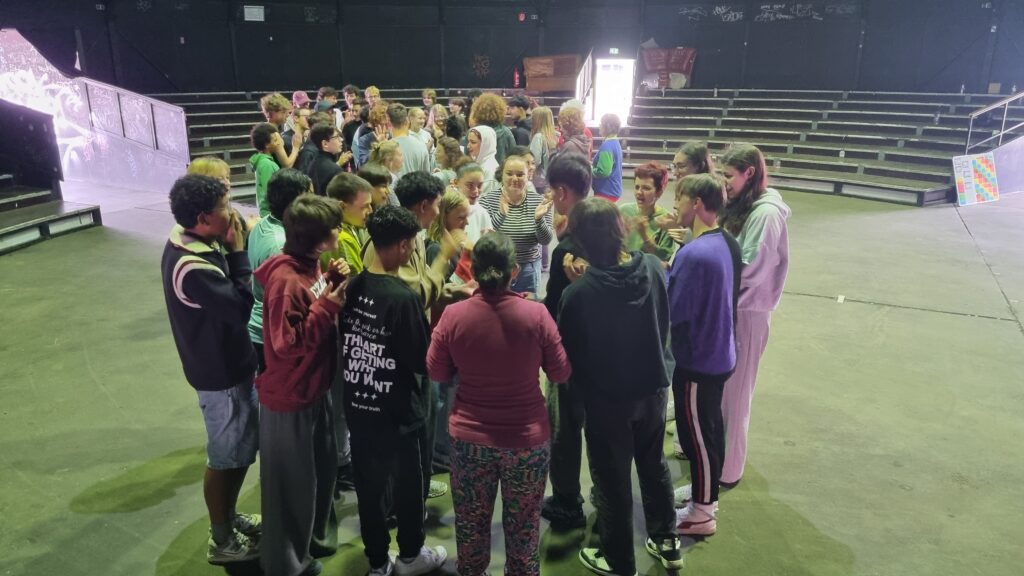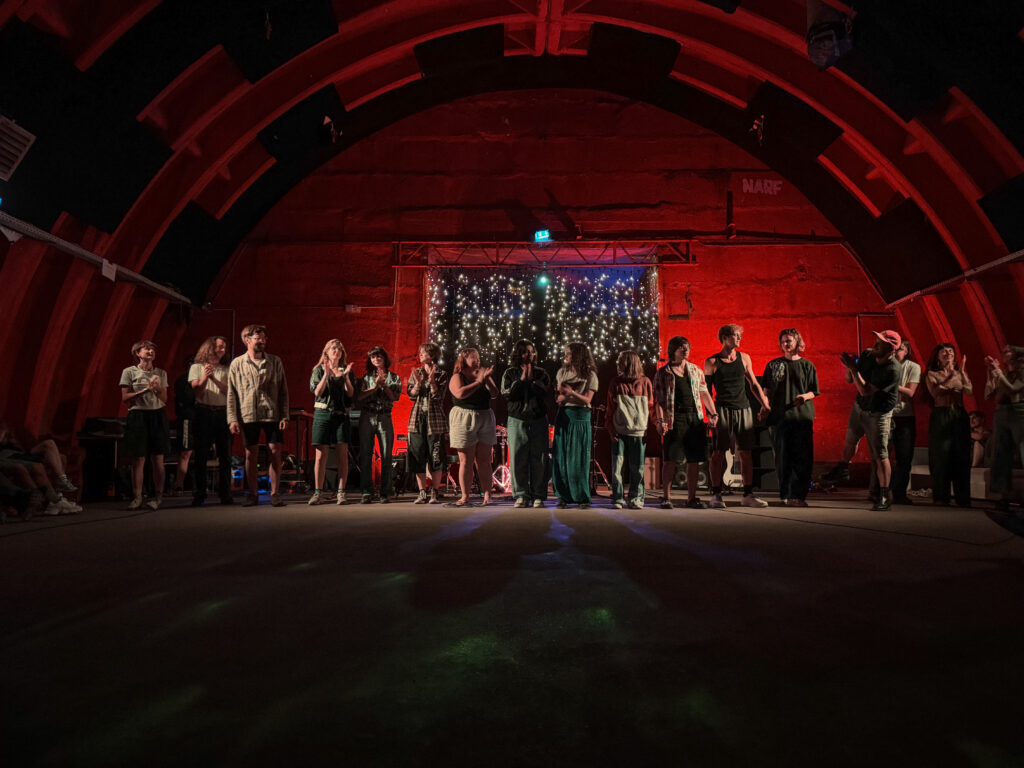
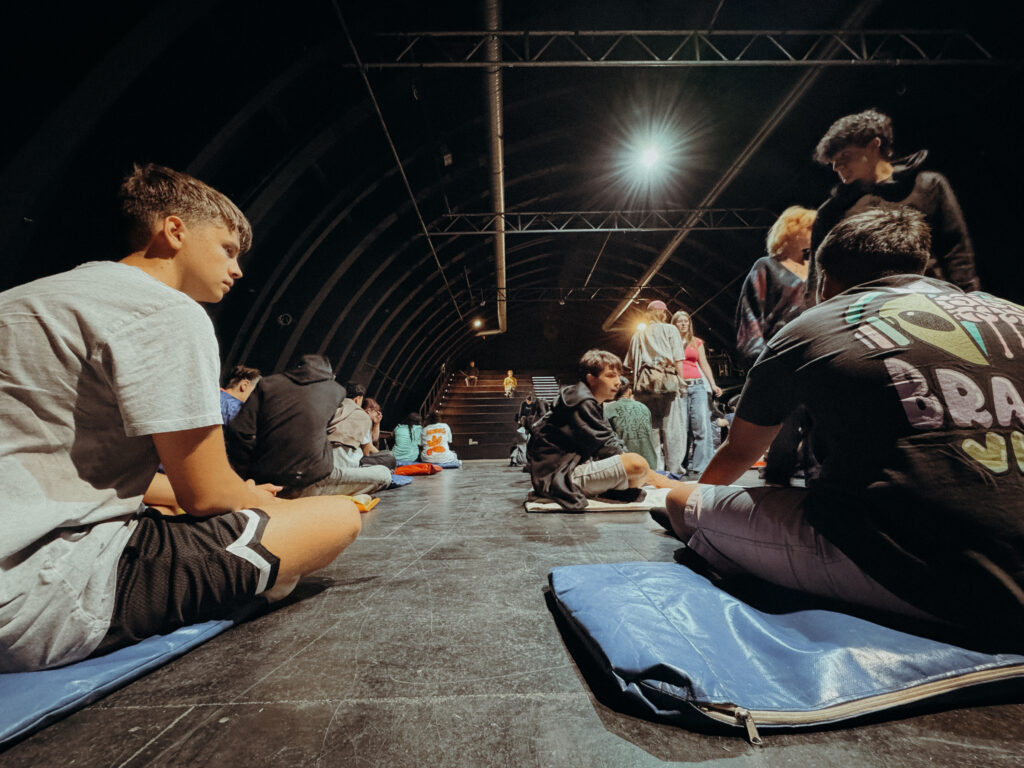
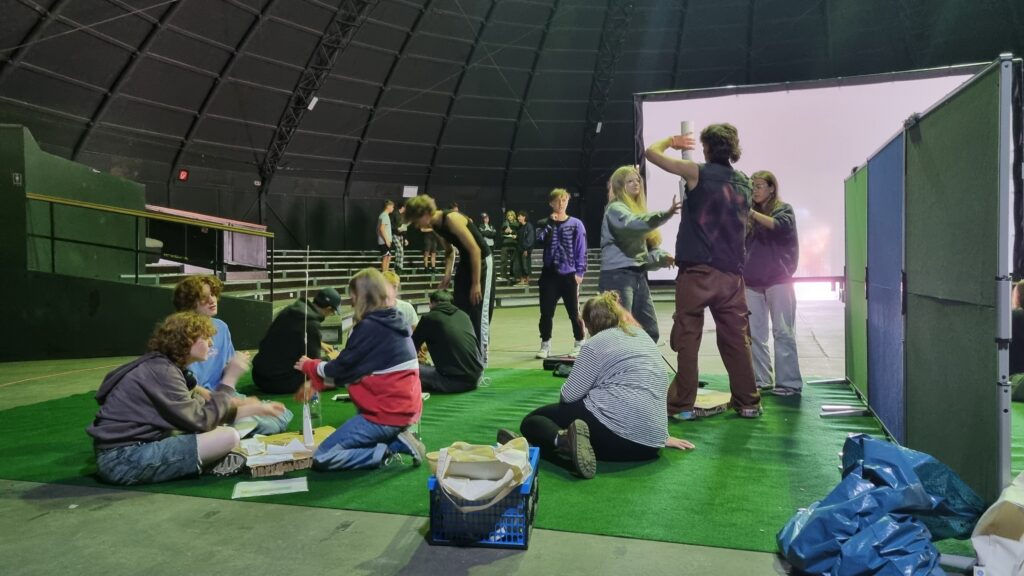
Voices of participants
„I really liked Art Camp 2025. I made many new friends from other European countries and was able to express myself through art and music. I also enjoyed the social themes and I will never forget this summer.“
„I had already been at Art Camp last year and even if the program hasn’t changed that much I still learned a lot and had many new experiences. It was an amazing time and I wish I could go back every second. I met a lot of new people and even made some friends. People who organise it every year will always have my sincere gratitude. And how could I forget about the most delicious food I have ever had? Art Camp is a unique experience that I wish everyone would have a chance to participate in
„My experience at the Art Camp is one that I will never forget and also something that I’d hope will never end. I made a lot of friends there and was able to connect with so many people and learn so much from them. I really enjoyed my time there.“
„I was so happy to come back to the Art Camp this year. It is a great experience and opportunity to talk to people from different backgrounds. During these ten days it was like being in a different world. The place is amazing, so big and colourful. The people are so nice and open-minded. The teamers are so organised and helpful. The workshops are a great way to be creative and implement your ideas. The leaders gave us a lot of support and inspiration. Art Camp helped me a lot to be more confident and open to other people. To come home was like waking up from a dream. A wonderful dream.“
“ I think this exchange was enriching for me. I loved discovering another culture and I feel like it was an opportunity to step outside my comfort zone.”
“ I feel like I’ve blossomed during camp and this will help me in high school. I’ve made some good friends.”
“I would really like to come back next year to see all my friends again and keep the bonds I’ve created these past two years, to continue to discover little passions and hobbies and rediscover the new theme.”
“ The Art Camp enabled me to express myself better and better in English. Meeting new people and the language are the things I’ll treasure most from this stay. That’s it for me, despite the ups and downs of my stay, I have very, very good memories of it.”
“The Art Camp enabled me to put my opinions and problems into perspective, and allowed me to meet many open-minded and willing people with whom I have forged friendships that will surely go beyond the Art Camp. It also helped me learn to say “hi” in all the languages of the people I spoke to (hallo, holà, cześć, ciao, привіт).”
“This camp was a kind of liberation for me, I did things I would never have thought of doing before and I think the caring environment helped me to feel at ease. I never felt judged, observed or even threatened, but more like 2 weeks on a little cloud of positive vibes.”
Group fom Arciragazzi – Current place of living in Italy
This year, the Italian group was made up of fourteen young people living in the Emilia-Romagna region and ranging in age from almost-14 to 17 years old. Although some of them knew each other from back home, they all brought with them different life experiences and perspectives on the world, which helped nurture engaging dialogues on some of the many possible answers to this Art Camp edition’s main question, “What is Class about?”.
The group was able to debate challenging and sometimes divisive topics , such as justice (both in and out of courts), double societal standards, immigration, privileges and oppressions. All of the youths either learnt or honed in their listening skills, their ability to stand their ground and argue their points constructively and, most importantly, their critical thinking skills.
The camp’s theme was felt deeply by each of the youths, and the presentation reflected their understanding of how different kinds of discrimination, privilege and oppression are interconnected and play out in a person’s daily life.
Group fom Ceméa Pays de la Loire – Current place of living in France
For the Art Camp 2025, Ceméa Pays de la Loire continued working directly with its two youth initiative incubator centers, Pépinières Initiative Jeunesse, in the city of Nantes. These youth centers are part of a network of local actors that welcome, inform, guide and support youth aged 14 to 25. Their main goal is to foster empowerment, citizenship and to develop experimentation and creativity amongst its users.
Our group was made up of eight participants all based in the metropolitan area of Nantes, in Western France with diverse social and cultural backgrounds. Some of them knew each other beforehand, for others, it was the first time they met. In other to prepare for the camp, we met twice before the camp: once with the participants and the parents to present the project and answer practical questions. A second meeting with only the youth to get to know each other, start reflecting on the topic and prepare for the trip.
During the first three mornings, the group worked together to find a common definition for this year’s theme: „What is Class About? Youth Perspectives on Social Justice and Democracy in European Society „
Even though the majority of the group knew each other, we decided to spent part of the first morning doing some getting to know each other activities, but more topic-oriented. Each participant was encouraged to talk about their background, personal interests, activities, values, and social issues that were important to them. Our goal was to come up with a shared definition of key terms : class, social justice and democracy, that we could use as a base for more in-depth exploration of the topic.
The following days the group explored the issues of discrimination, equality and inclusion. Different active education methods were used to encourage critical thinking and active listening . The objective was to provide an analysis of current social issues that were important to them and help them transition to a more hands-on approach of “ how can I, as a young individual, have an impact in the society I live in?” .
Participants felt safe to shared their different perspectives on capitalism, patriarchy, homophobia, fascism, individualism and hyper consumerism. They were confronted to different opinions and points of view which enabled them to take a step back from their experiences and take a different stance on certain issues. By the end, the notions of engagement, citizenship and solidarity were the main focus of the discussion.
The last part of the workshop was spent brainstorming and preparing for the final presentation of their findings. They collectively decided to use two approaches: one group wanted to use body language and physical expression to communicate the message whereas the other opted for a more visual and manual presentation. The final presentation was therefore a staging of different situations demonstrating the impact of solidarity, accompanied by posters calling for action for global social justice.
With this approach, our objective was to get youth to reflect on their own personal lives and trajectories and to analyze their day-to-day practices and issues they encounter. This lead to an increased awareness of the major role they can play in today’s civil society. This work provided a foundation for further exploration of the topic during the artistic workshops.
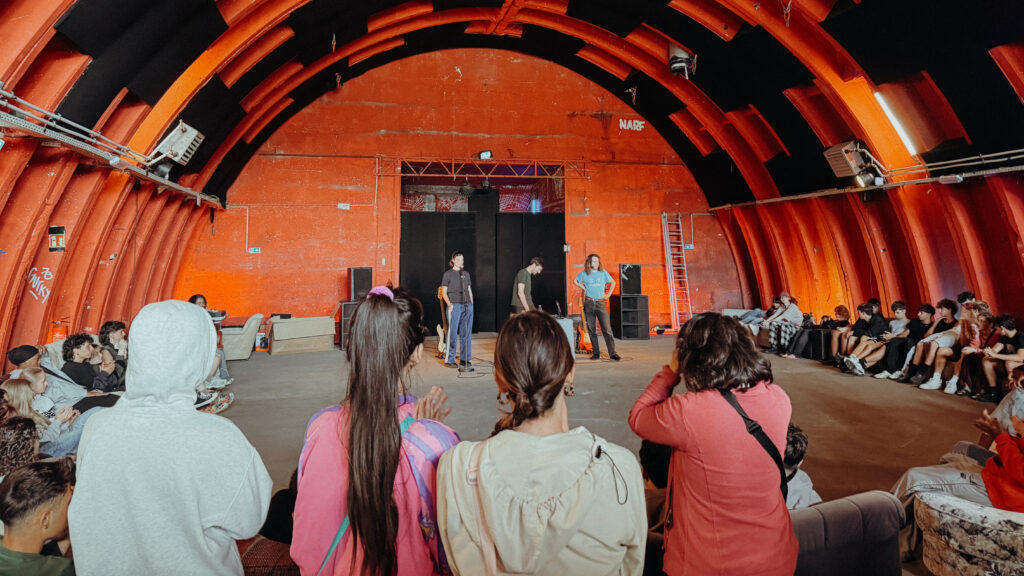
Group from the Fundacja „Rodowo“ – Current place of living in Poland
The polish group mostly consisted of young people from Katowice and Warsaw with 2 members from Rzeszów.
Throughout the three days we were busy discussing the topic „What Is Class About? – Youth Perspectives On Class In European Society“ and preparing our take on it.
First we played a game where participants took different roles in the world of class which inspired them to talk about different people’s views. Then we discussed how those groups feel and view the world. And it led to a beautiful presentation, which was all about compassion, understanding and a little bit of comedy. The preparation involved costume design, creative writing and a dialogue with representatives of particular groups present at the camp, so we could respectfully present their views. Other important thing was putting our own feelings into this creation. I say our, because me and other polish teamers were also at the scene together with all of them in happiness and sorrow.
In summary, our main point of discussion were struggles of the whole social circle with the pressure on the class aspect of it (like money and education). We also had fun together and created something I can say I feel proud of.
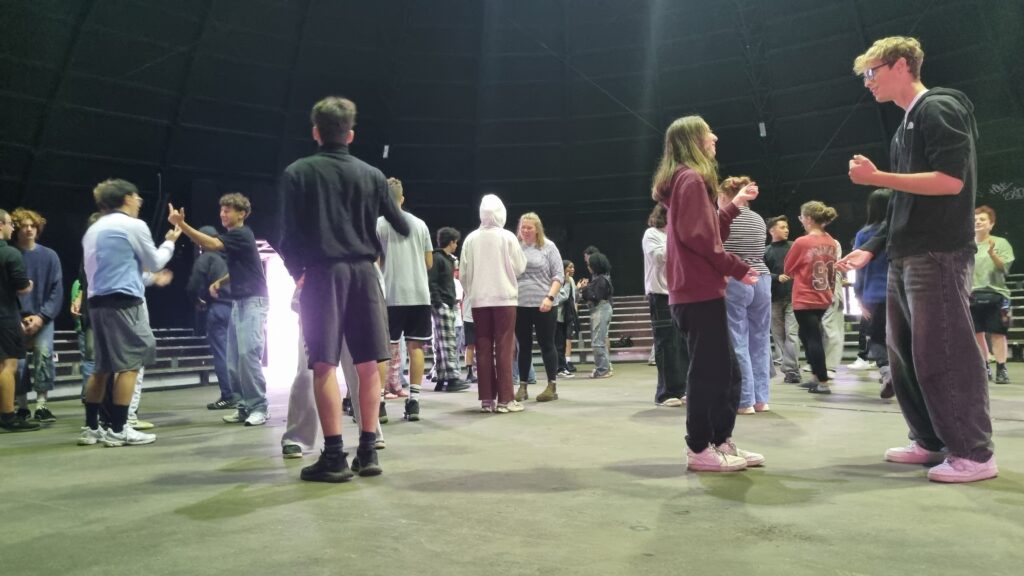
Group from Soziale Bildung e.V. – Current place of living in Germany
The group of young people living in Germany came together from different regions of the country, with most participants traveling from Mecklenburg-Vorpommern. Their biographies were diverse: some were born in Germany, while others had experiences of displacement or an international family background.
In the language-group workshops, the participants explored questions of social inequality. They discussed different forms of unequal distribution and examined their impacts on people’s lives. The group also reflected on whether individual effort can compensate for inequalities, what opportunities exist for social mobility, and which structural barriers stand in the way.
A particular focus was placed on the discrimination form classism. After a short theoretical introduction, we worked with three rap songs in which artists address issues of social inequality and classism from different perspectives. The young people analyzed the lyrics, exchanged viewpoints, and discussed various facets of the topic.
In the end, we summarized the group’s key insights, perspectives, and reflections in a short presentation and shared it with everyone.